
Hydrogen
Contributing to the Realization of a Hydrogen Society through Technology that delivers Optimal Solutions
As a key energy source for achieving carbon neutrality, the demand for hydrogen is expected to increase due to the following characteristics:
Characteristic 1
Hydrogen does not emit carbon dioxide (CO2) when ignited.
Characteristic 2
Hydrogen can be 'produced' from multiple sources including renewable energy, oil and natural gas.
Characteristic 3
Hydrogen can be ‘stored’ and ‘transported’ in different forms.
Characteristic 4
Hydrogen can be ‘utilized’ for power generation, as fuel for vehicles, as a raw material and for producing heat, in a wide range of industries including petrochemicals and steel.
The Japanese government's ‘Basic Hydrogen Strategy’ establishes hydrogen use targets of approximately 3 mtpa by 2030, 12 mtpa by 2040 and 20 mtpa by 2050, in line with the increasing demand for hydrogen worldwide.
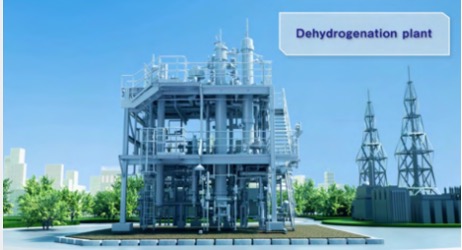
Chiyoda is contributing to the realization of a hydrogen society through technology that delivers optimal solutions, including (a) development of 'Large-scale electrolysis system' to produce hydrogen from water and (b) our proprietary ‘SPERA Hydrogen’ LOHC-MCH* technology, for the safe and efficient long-term storage of commercial quantities of hydrogen and transportation over long distances. It can use existing infrastructure, such as redundant oil storage tanks and conventional tankers, under current international laws, standards and regulations, facilitating a quick and cost-effective construction of supply chains for general hydrogen consumption.
- As a Liquid Organic Hydrogen Carrier (LOHC), methylcyclohexane (MCH) is a liquid at ambient temperature and pressure and is widely used in the manufacture of pharmaceuticals and as a solvent in correction fluids. MCH contains 530 times more hydrogen by unit volume than hydrogen gas, allowing for efficient and safe storage and transportation of hydrogen.
Chiyoda’s Hydrogen Community Vision
Through the commercial development of hydrogen supply chains, Chiyoda supports the global drive towards carbon neutrality by establishing hydrogen as the central energy resource in a future hydrogen society.
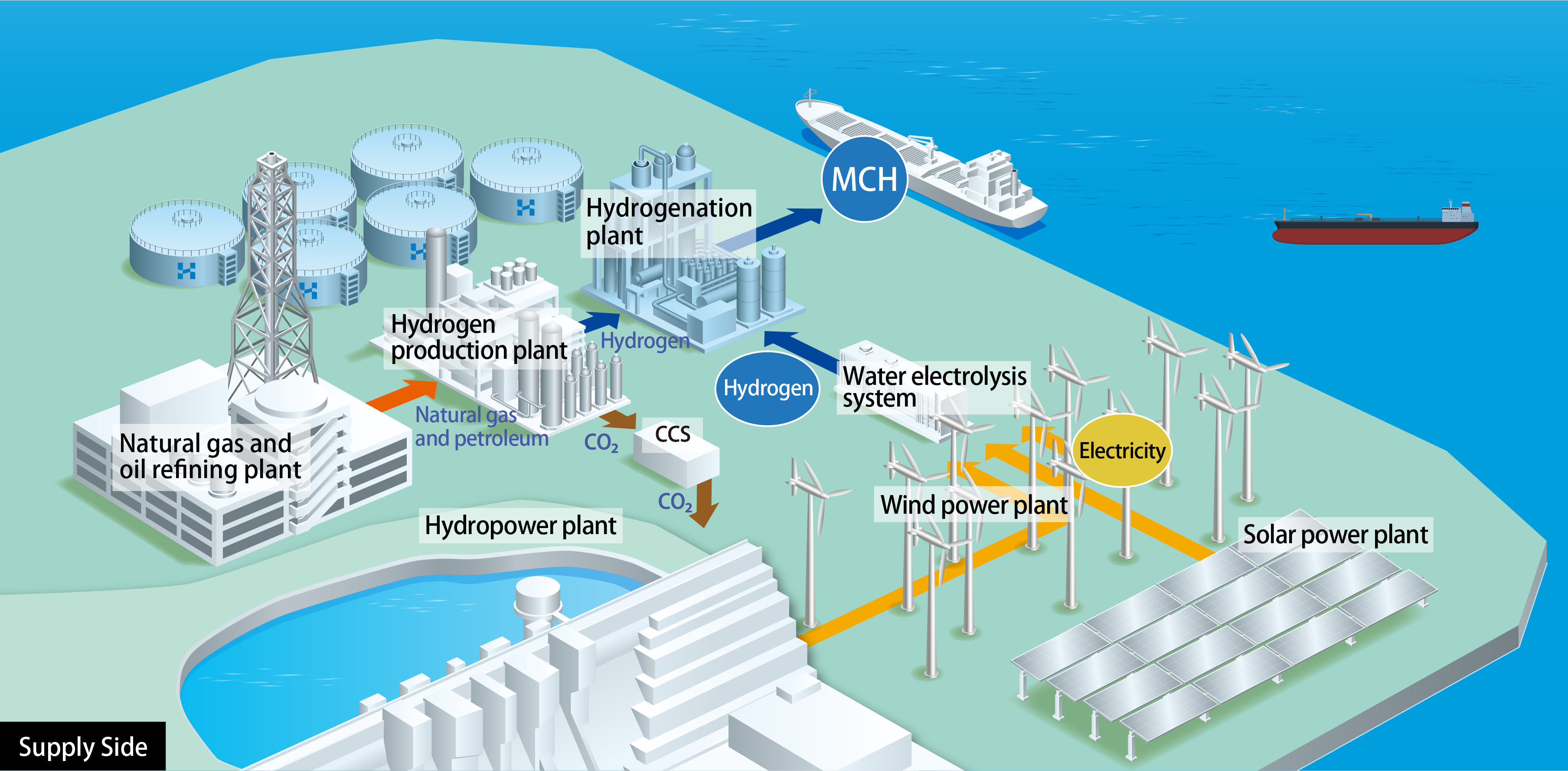
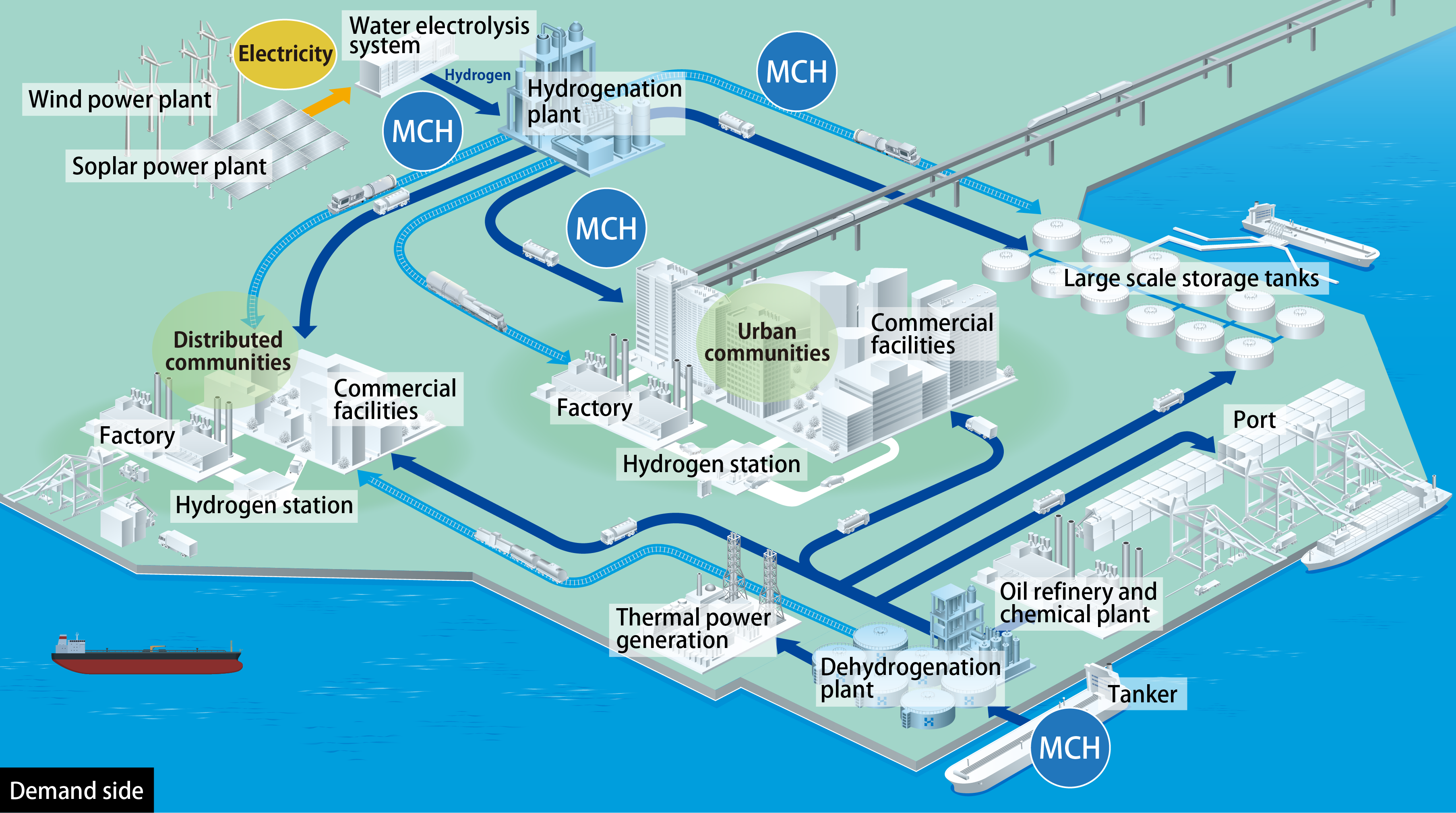
Initiatives for Establishing a Hydrogen Supply Chain
Chiyoda actively promotes the development of hydrogen supply chains, as illustrated below:
Hydrogen Production
Development of a Large-scale Electrolysis System
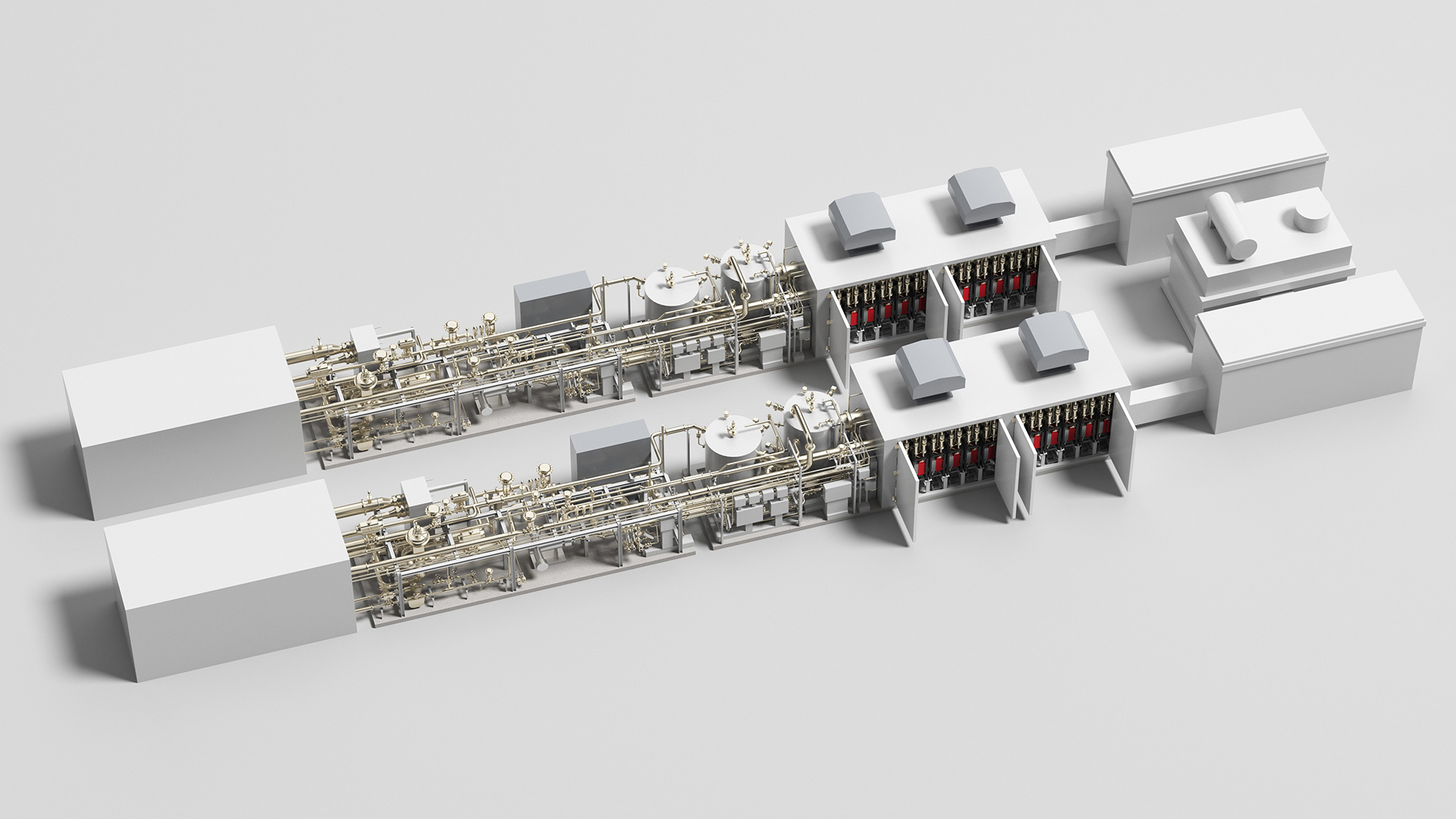
Chiyoda is collaborating with Toyota Motor Corporation in the development of a large-scale electrolysis system. By integrating and optimizing Toyota's fuel cell technology for electrolysis cell stacks with Chiyoda's expertise in plant engineering, such as scale-up engineering and skid packaging, we are developing compact, highly-efficient and cost competitive large-scale electrolysis systems - addressing a wide capacity range required to produce hydrogen in the global market.

Electrolysis system line-up (basic units)
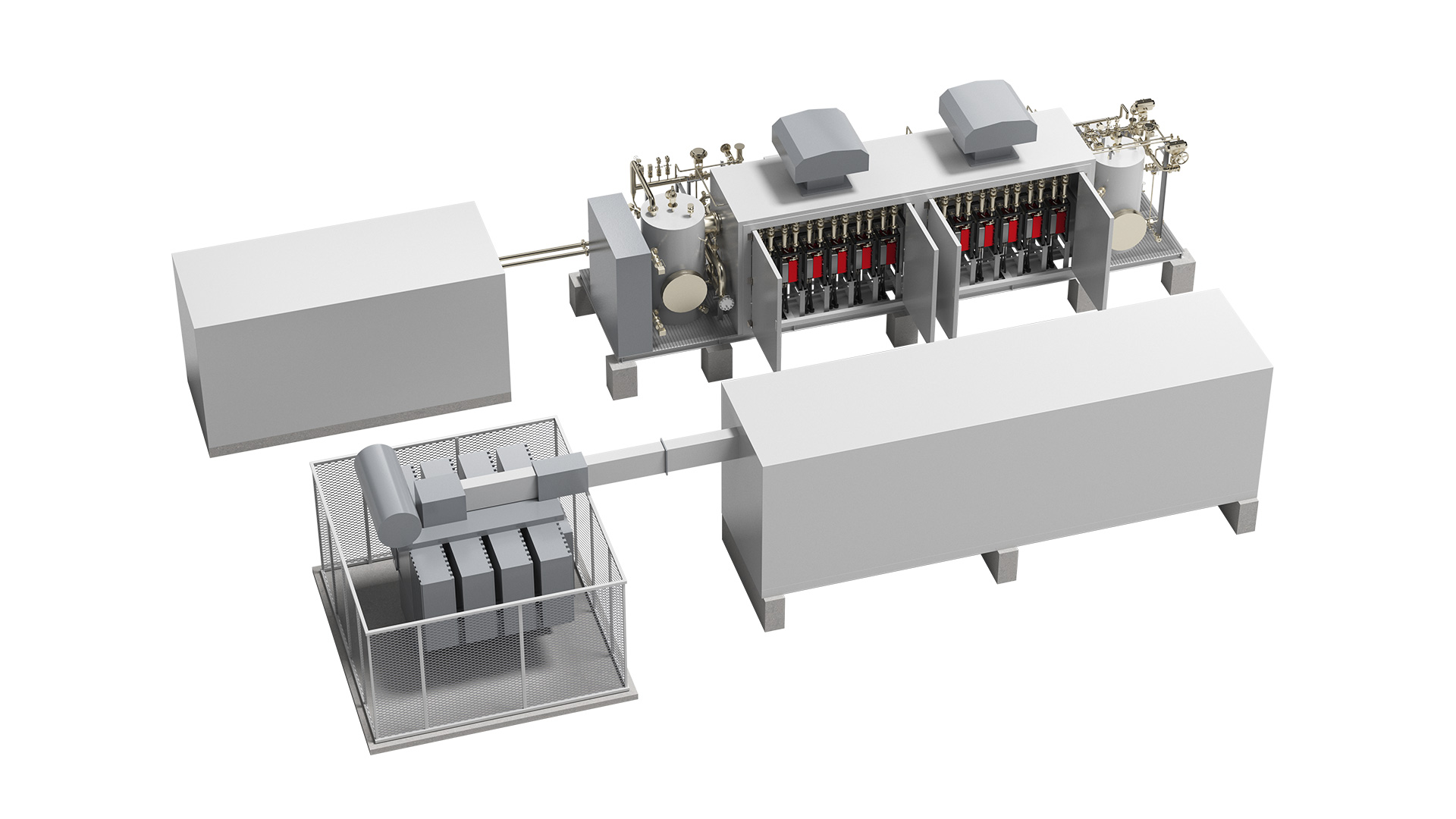
CTXE5000-2A
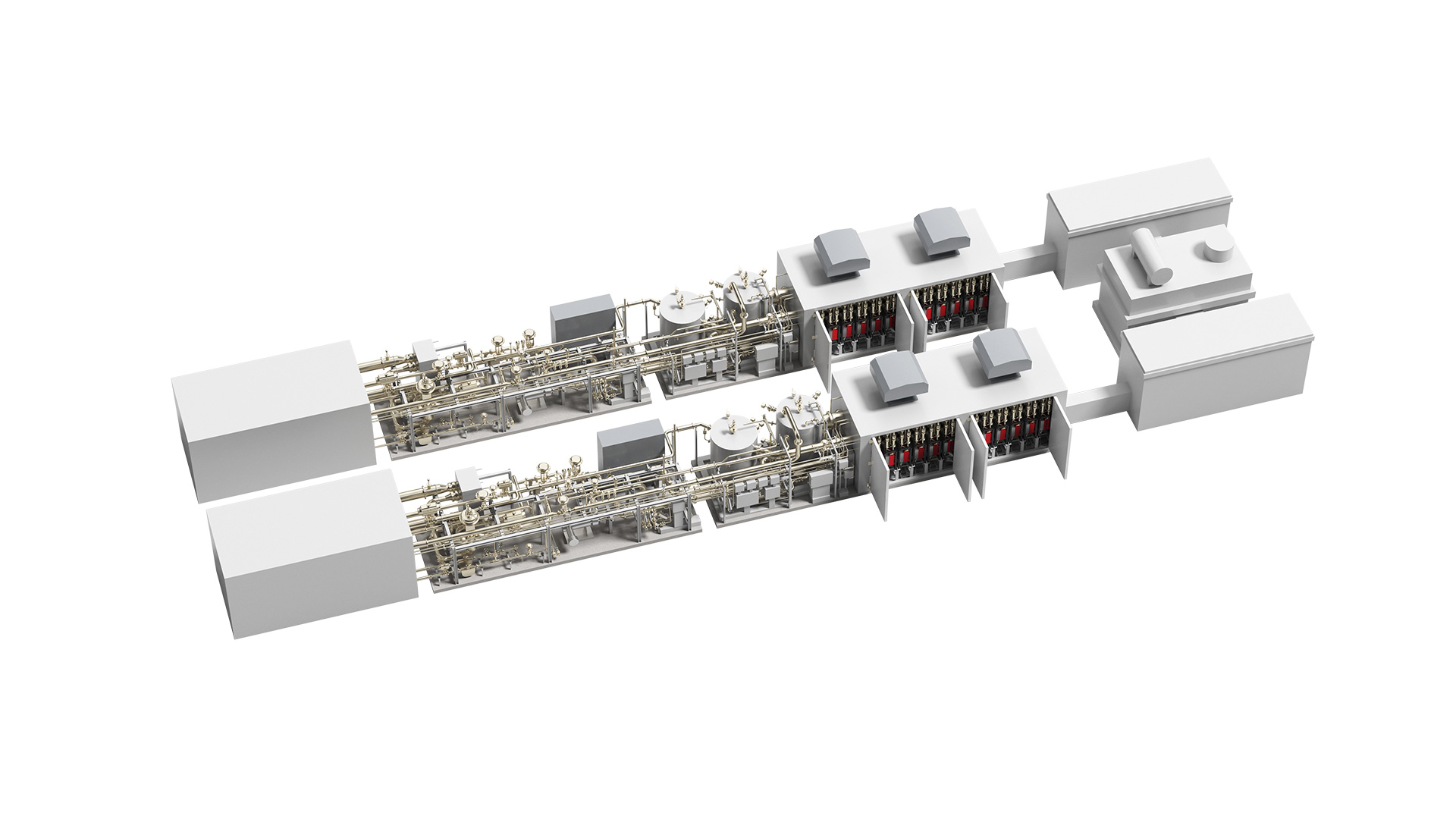
CTXE20000-2A
The 5MW system is designed primarily for mid-scale plants in Japan and the 20MW system for large scale plants overseas, with a hydrogen production capacity range of approximately 100kg (5MW) to 400kg/hour (20MW).
<Key Features>
- High Reliability : Over 30 years development of fuel cell technology by Toyota
- High Efficiency : World-leading efficiency in power consumption
- Compact System : Densely integrated cell stacks and balance-of-plant equipment are skid-mounted to deliver a Plug & Play* solution that enhances mobility, minimizes onsite construction work and shortens installation timelines.
- Wide Capacity Range : Scalable lineup from small to large capacities according to applications
- Easier Management : Chiyoda's patent-pending cartridge-structured cell stack allows easier exchange of cell stack and shortens the maintenance period.
* A mechanism where new hardware can be connected and automatically recognized, configured, and ready for use immediately.
Progress from demonstration to social implementation
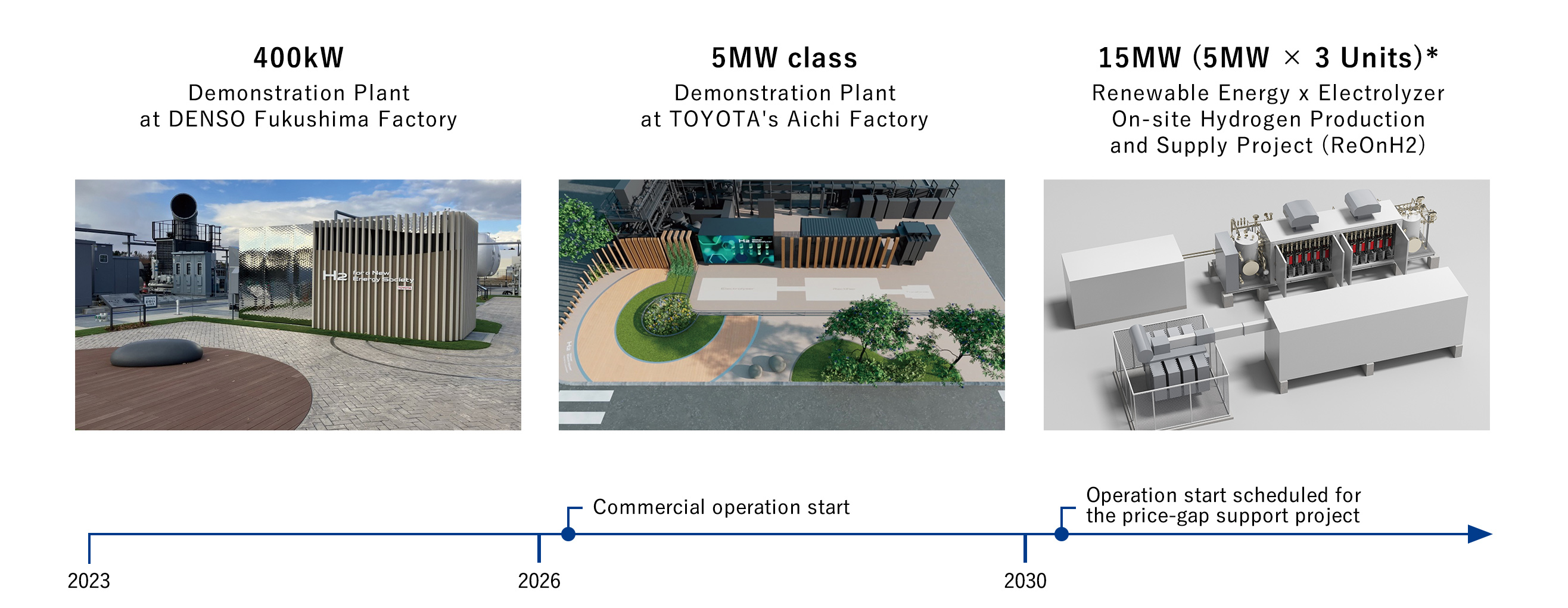
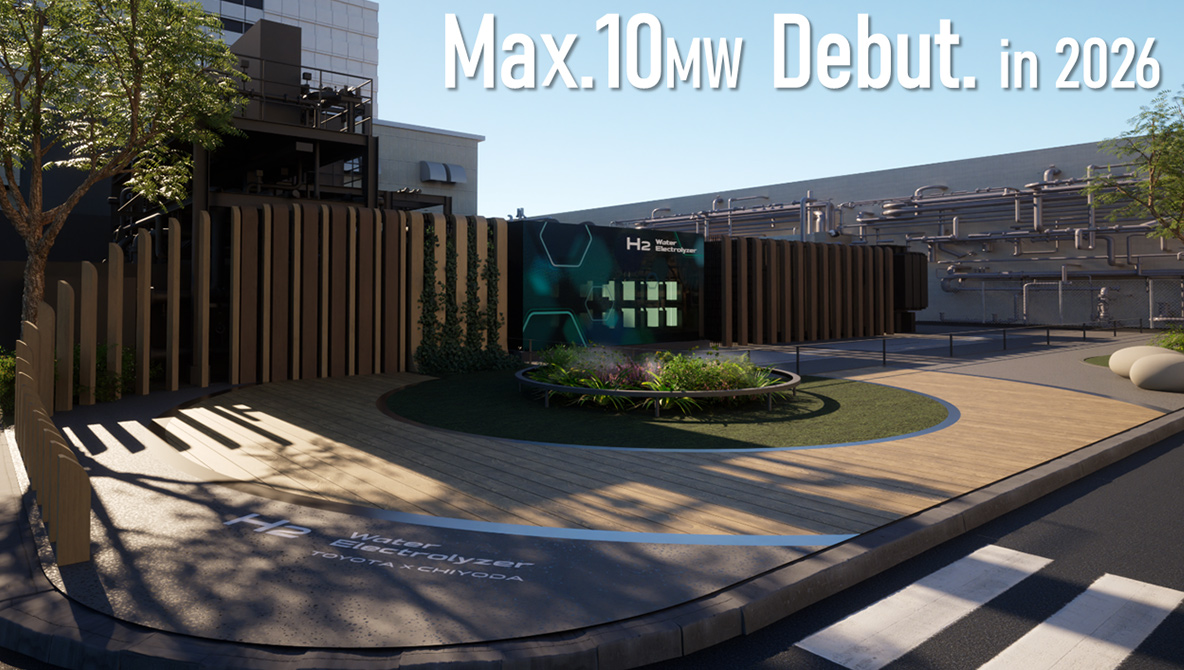
In spring 2026, a 5MW class commercial demonstration plant was installed at the Hydrogen Park within the Toyota Honsha Plant to validate performance, ahead of full-scale deployment. The 20MW system is a scaled-up extension of the 5MW configuration, designed to deliver the same level of performance and reliability. This scalability enables flexibility in addressing a broad range of hydrogen production needs.
A mass production system for cell stacks is targeted for establishment by 2029, providing a stable supply framework capable of meeting diverse customer requirements. Electrolysis systems jointly developed with Toyota will also be supplied to an onsite low-carbon hydrogen production and supply project* certified under the Ministry of Economy, Trade and Industry’s support scheme, aimed at bridging the price gap under the Hydrogen Society Promotion Act. Operations are scheduled to commence from 2030.
*Price-gap support project:
Chiyoda Corporation plans to deliver a water electrolysis system for a low-carbon hydrogen production business being conducted by Toyota Tsusho Corporation, Eurus Energy Holdings Corporation and Iwatani Corporation at Aichi Steel Corporation
Optimal O&M services leveraged by engineering expertise
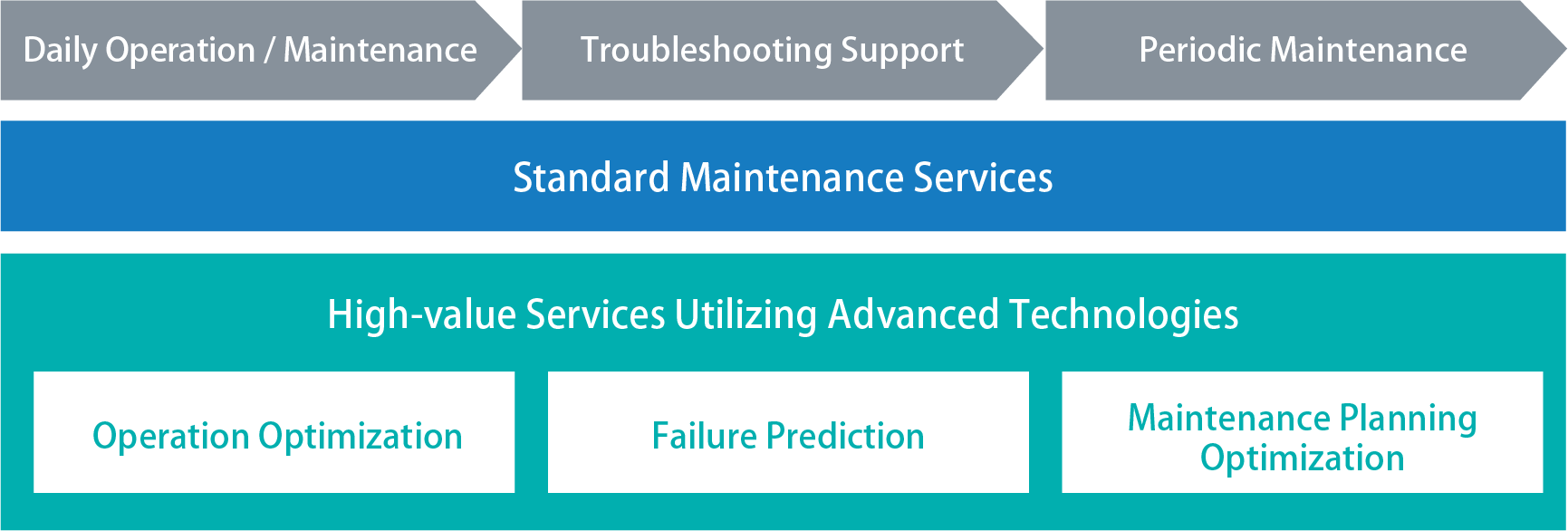
Leveraging Chiyoda's plant engineering expertise, including advanced control and simulation capabilities developed through the execution of EPC projects, we support the operation of electrolysis systems and ensure stable and reliable hydrogen production and supply across the entire lifecycle. Our O&M services deliver comprehensive standard maintenance services from daily operation and maintenance to periodic maintenance, while the following high-value services utilize advanced technologies to further reinforce the reliable and resilient plant performance.
- Operation optimization: Proposes optimal operating conditions based on data and models in line with demand, reducing hydrogen production costs and extending equipment lifetime.
- Failure prediction: Visualizes equipment conditions using operational data and detects early signs of anomalies, preventing unexpected disruptions and improving availability.
- Maintenance planning optimization: Optimizes maintenance plans based on equipment condition changes, enabling efficient maintenance, reducing spare parts and replacement costs, and enhancing plant availability.
High-value services utilizing advanced technologies
Transporting and Storing Hydrogen
World’s First Global Hydrogen Supply Chain Demonstration Project
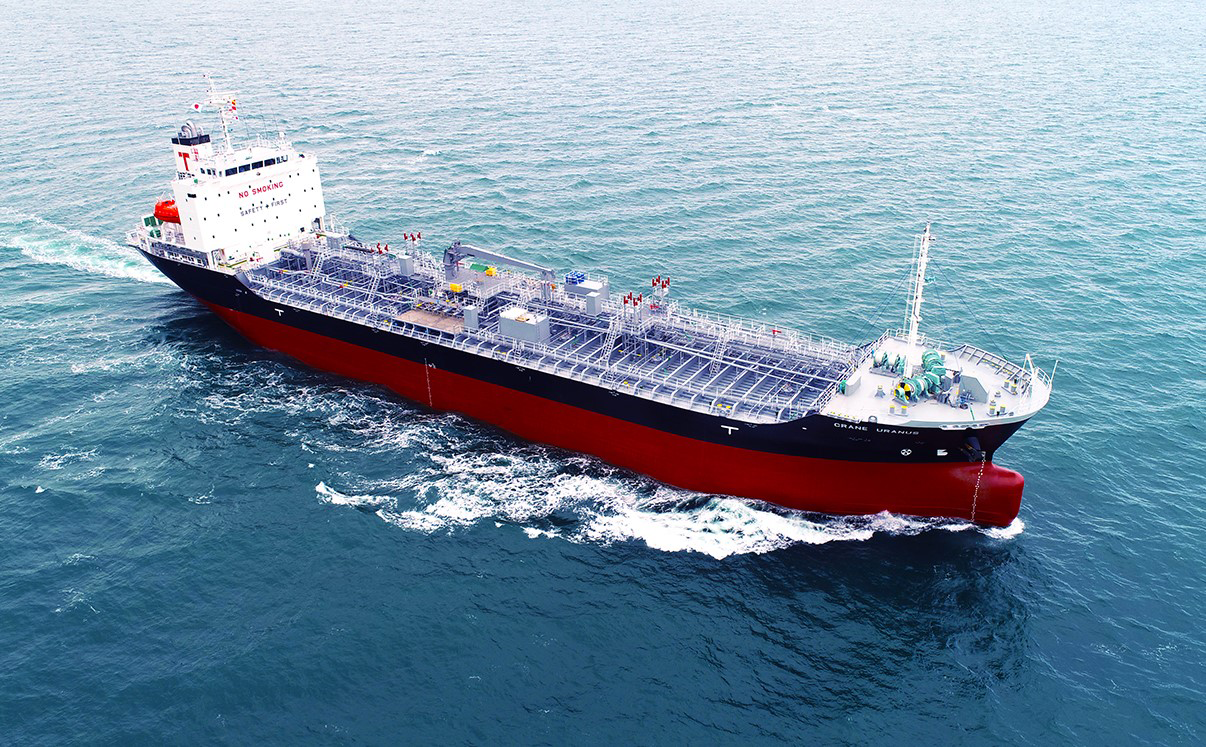
Chiyoda completed the world's first global hydrogen supply chain demonstration project using MCH in 2020 and in 2022, we successfully carried out the world's first maritime transportation of MCH using a conventional chemical tanker. We continue to contribute to the development of further supply chains.
Utilizing Hydrogen
Hydrogen Transported in the form of MCH Supplied as Fuel for Gas Turbine Power Generation for the First Time in Japan
In the world’s first global hydrogen supply chain demonstration project, hydrogen transported in the form of MCH from Brunei was supplied to the gas turbine of Mizue Power Station, operated by Toa Oil Co., Ltd., at their Keihin Refinery in Japan in 2020. This marked the first utilization of hydrogen for power generation in Japan.
Distributed Hydrogen Supply
- As part of a New Energy and Industrial Technology Development Organization (NEDO) subsidy program from FY2016 to FY2018, Chiyoda demonstrated on-site hydrogen stations as a decentralized hydrogen supply solution and successfully achieved miniaturization of MCH dehydrogenation equipment.
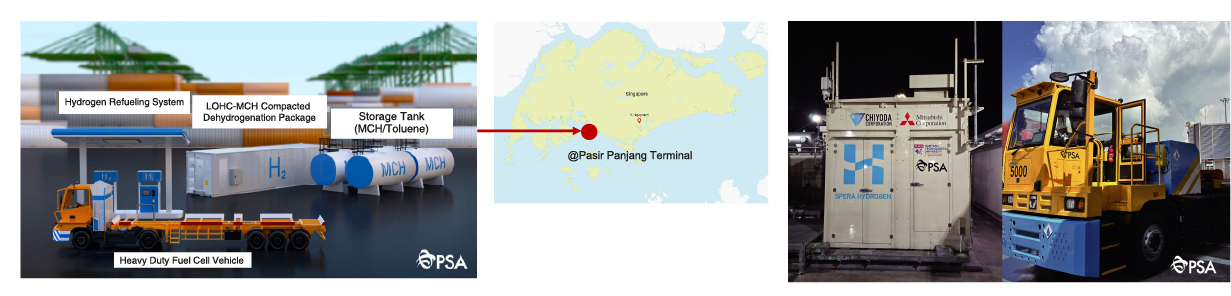
- In early 2024, Chiyoda and partners commenced a MCH Dehydrogenation Refueling Station demonstration project in Singapore, to operate heavy duty Fuel Cell Vehicles (FCV) with imported hydrogen at Pasir Panjang Terminal. This demonstration operation of MCH Compacted Dehydrogenation Package, targeting decentralized applications was successfully completed by the end of September 2025.
Future Hydrogen Utilization
- Hydrogen is expected to be utilized as feedstock and as a source of heat in a multitude of industries including power generation, mobility, steel production and the petrochemical industry.
- MCH can be stored in tanks as a large-scale energy reserve and for hydrogen extraction, as required.
Initiatives to Reduce Hydrogen Supply Costs
The Japanese government's ‘Basic Hydrogen Strategy’ establishes targets to reduce hydrogen supply costs from the current 100 yen/Nm3 to 30 yen/Nm3 by 2030 and 20 yen/Nm3 by 2050, essential for the realization of a hydrogen society. Chiyoda’s technology optimizes the entire hydrogen supply chain, reducing the costs of hydrogen supply.