
Climate Change
Our Attitude and Initiatives towards Climate Change
The Group recognizes climate change as a significant management issue that may affect its business activities. While climate change poses various risks, it also creates new business opportunities. Guided by its Purpose, "Enriching Society through Engineering Value", the Group regards climate change initiatives as an important management priority. The Group supports the recommendations of the TCFD and conducts assessments and analyses of climate-related risks and opportunities in accordance with the TCFD framework, while promoting appropriate strategies and actions to address them.
Governance
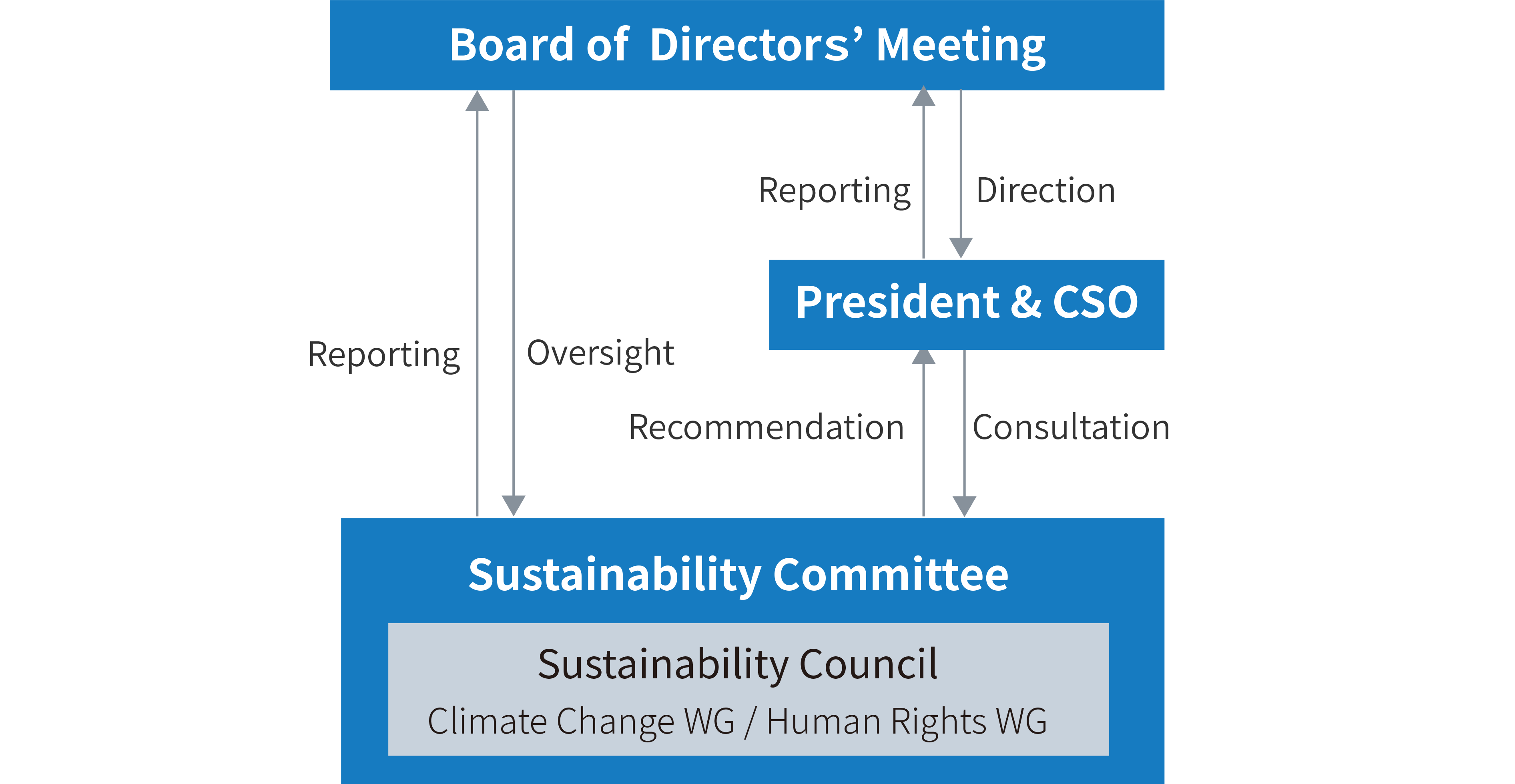
The Sustainability Committee reviews and deliberates on key sustainability matters, including climate change, and reports relevant findings and recommendations to the Board of Directors. The Board oversees the Group's response to climate-related risks and opportunities, including greenhouse gas emissions reduction targets and progress toward their achievement, based on reports received from the Sustainability Committee. Climate-related risks and opportunities are managed as part of the Group's enterprise-wide risk management framework. Material matters are reported to the Sustainability Committee and the Board of Directors for oversight.
Our Sustainability Governance Structure (Reporting and Oversight Lines)
Strategy and Risk Management
Scenario Analysis for Climate Change
The Group reviewed the climate-related scenario analysis conducted in fiscal 2019 and reassessed its assumptions in light of changes in the external environment and business conditions. In this analysis, we examined the potential impacts of climate change on the Group's business with reference to the categories of risks and opportunities outlined in the TCFD Recommendations. Using multiple scenarios with different temperature pathways, we assessed both transition-related and physical climate-related risks and opportunities. Based on the results of this analysis, we identified key risks and opportunities and are advancing the consideration of appropriate response measures.
Time Horizons
For the purposes of climate-related scenario analysis, the Group defined short-, medium-, and long-term time horizons based on its current medium-term management plan, interim targets for FY2030, and long-term objective of achieving carbon neutrality by 2050.

Climate Scenarios Used for Quantitative Assessment
The Group assessed climate-related risks and opportunities using multiple scenarios representing different temperature pathways.
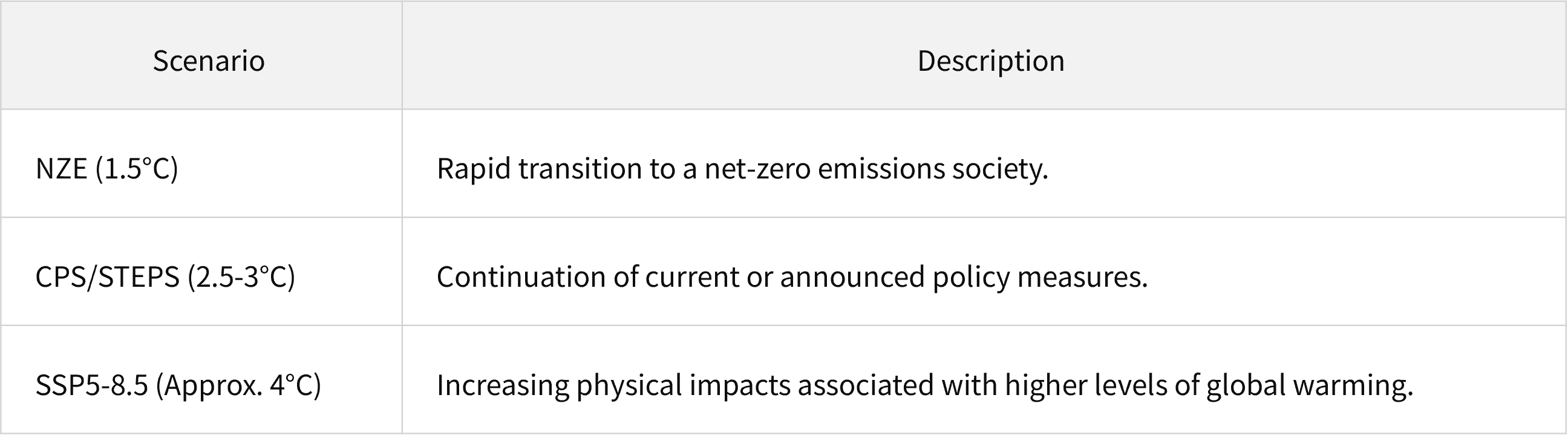
Scenario Assumptions
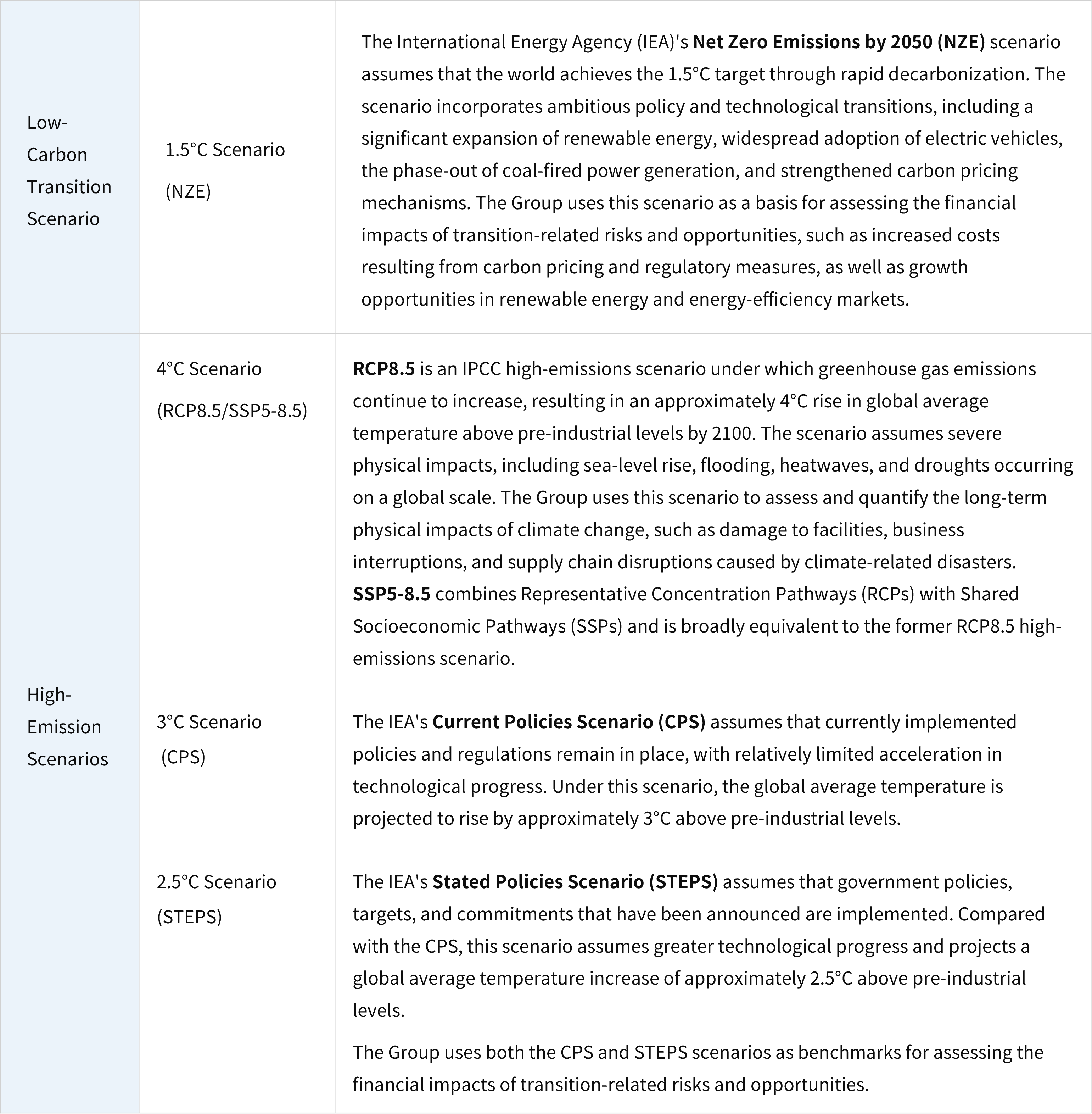
Reference Scenarios
Transition-related risks and opportunities were assessed with reference to the CPS, STEPS, and NZE scenarios presented in the IEA World Energy Outlook 2025, while physical risks and opportunities were assessed with reference to the IPCC SSP5-8.5 scenario
Risk Management Process
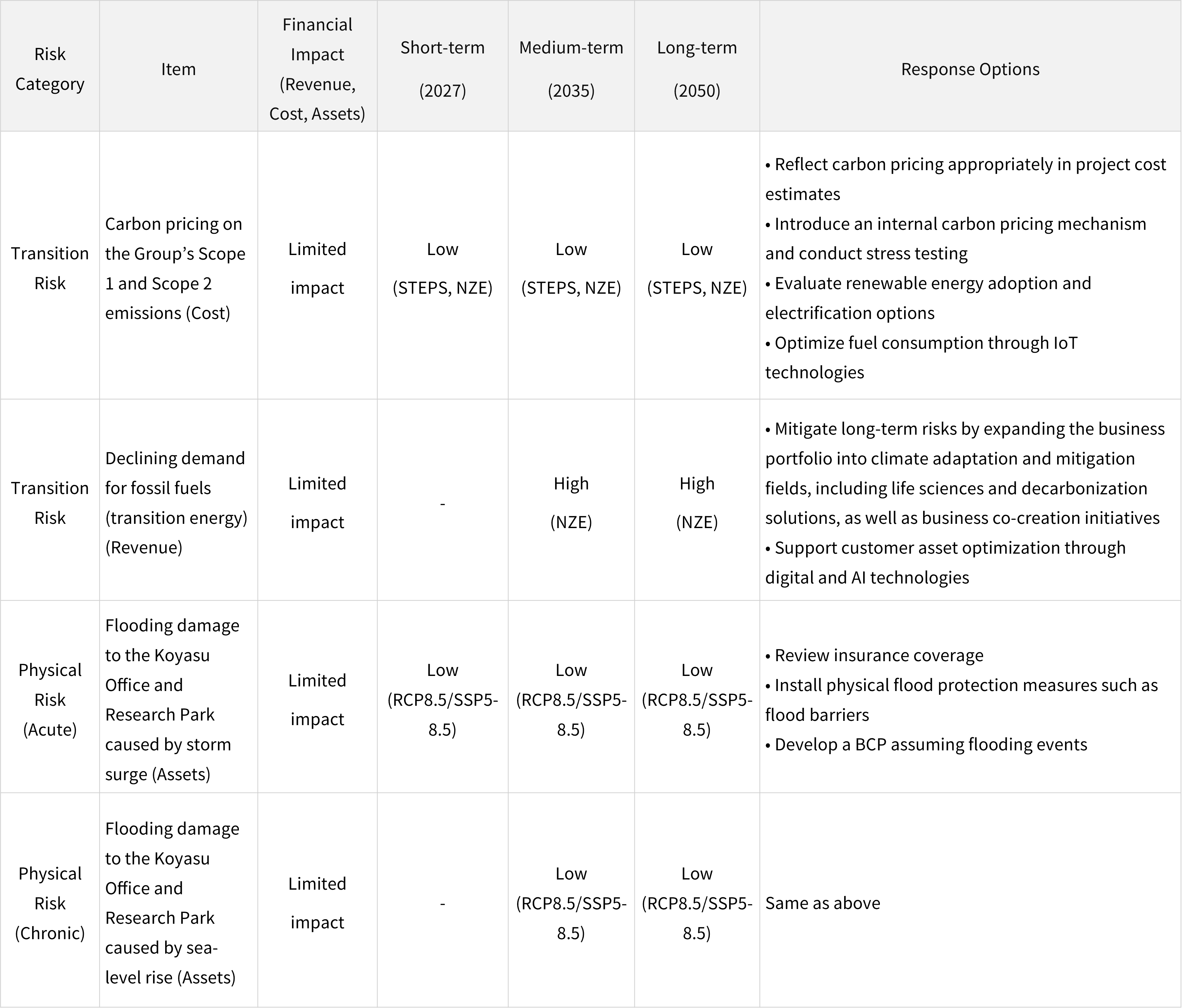
The Group manages climate-related risks as part of its enterprise-wide risk management framework. Risks and opportunities identified through scenario analysis and other assessment processes are evaluated in terms of their potential business impact and likelihood of occurrence, and are continuously monitored. Based on the results of this assessment, the key climate-related risks and opportunities identified as material to the Group are presented below.
Financial Impact by Risk/Opportunity and Time Horizon
The financial impact of each climate-related risk and opportunity was assessed based on its potential effect on revenue, operating profit, and assets. The level of impact was classified into three categories: High, Medium, and Low.
Climate-Related Risks
Climate-Related Opportunities
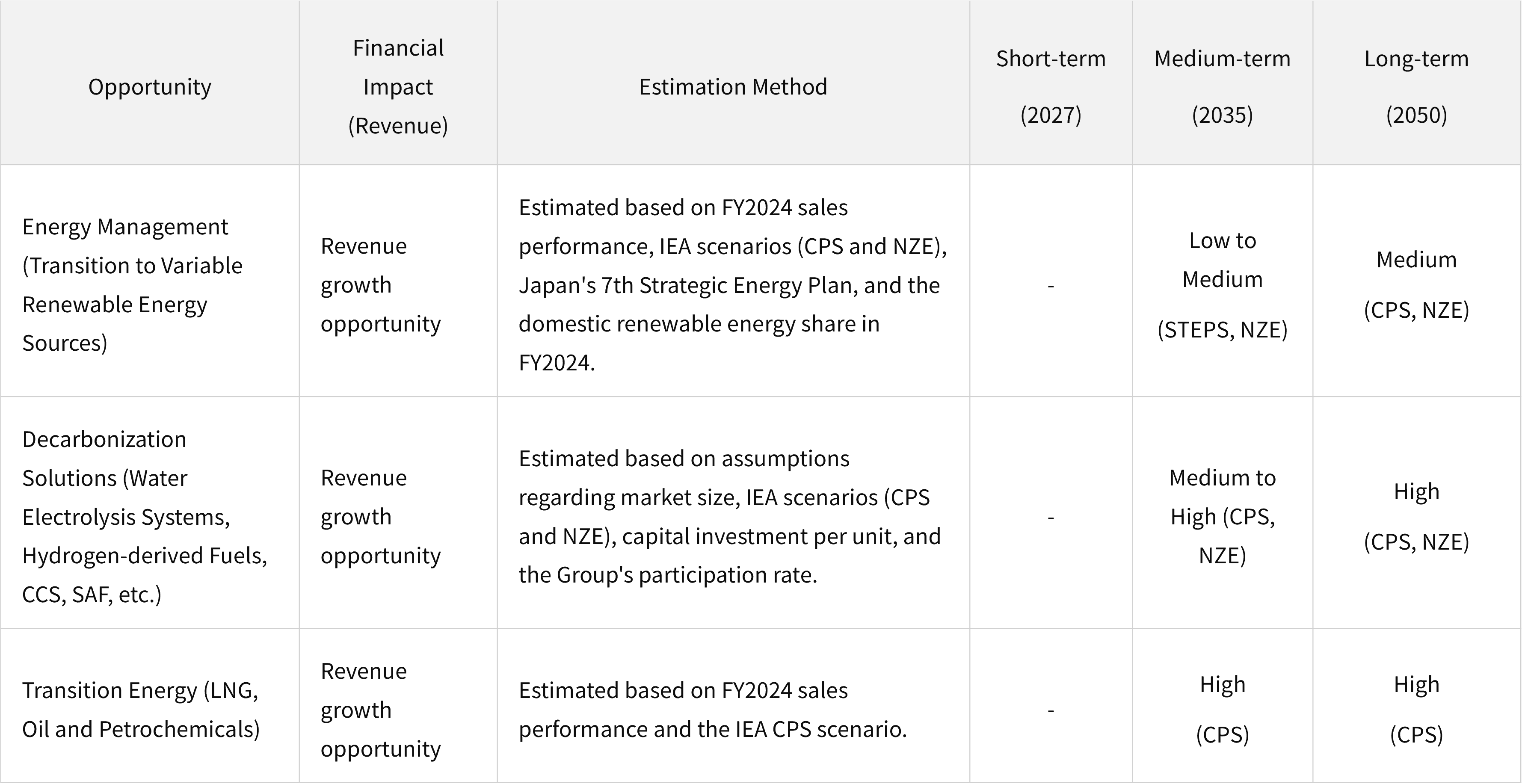
Note: The financial impact assessment was conducted using the climate scenarios specified for each risk and opportunity.
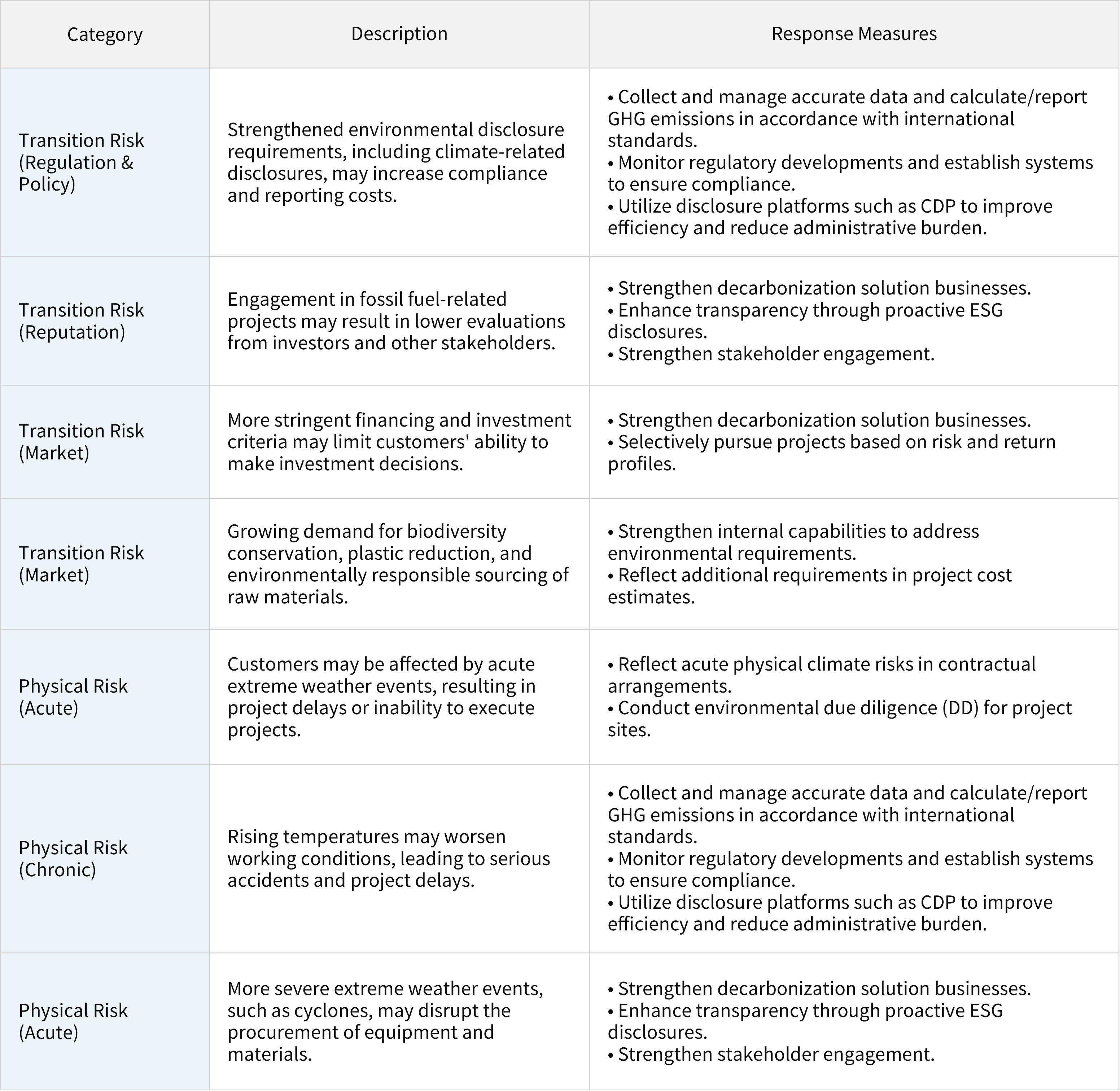
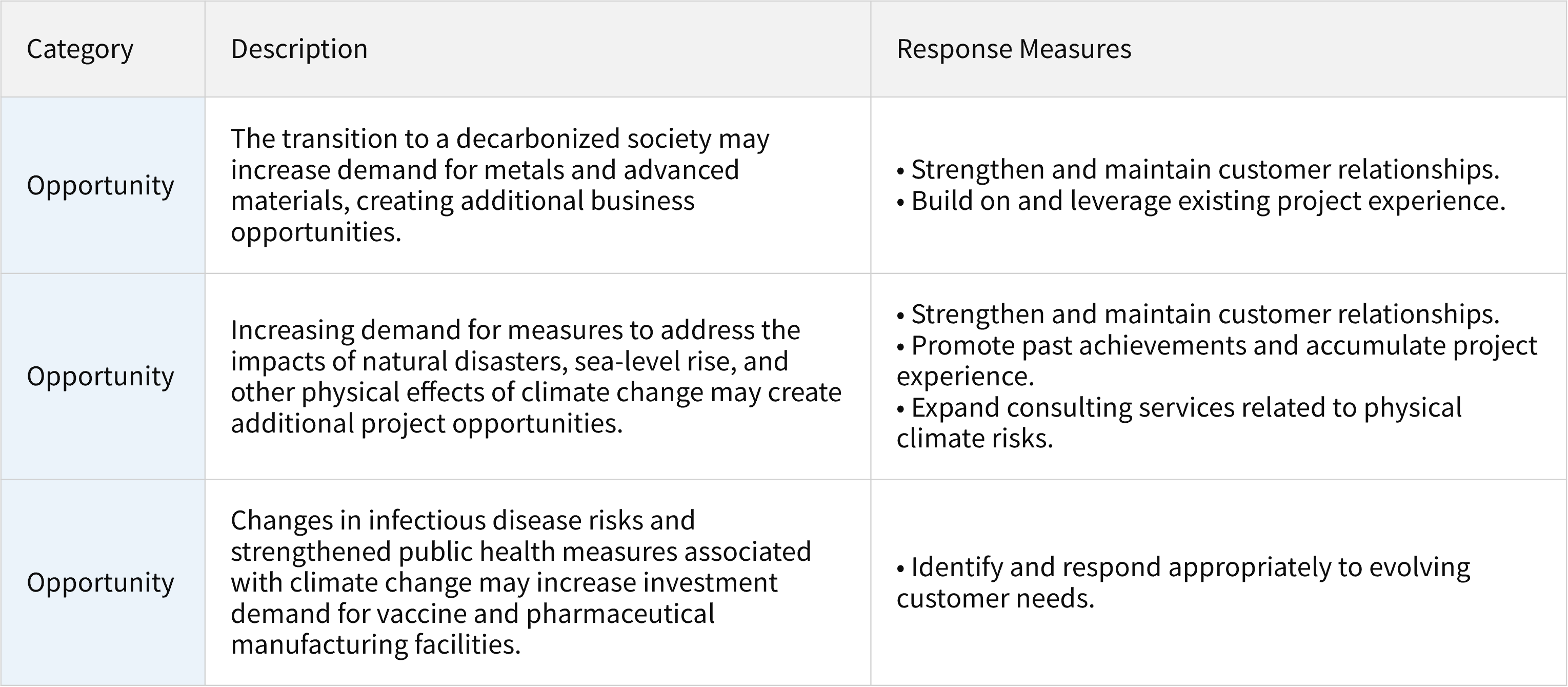
Other Climate-Related Risks and Opportunities (Qualitative Assessment)
Risks
Opportunities
Transition Strategy
The Group recognizes climate change response as a key management priority for enhancing corporate value. To reduce risks associated with the transition to a decarbonized society while capturing emerging business opportunities, we are implementing our transition strategy.

Indicators and Target
Carbon Neutral Declaration
Chiyoda is contributing to the realization of carbon neutrality
by 2050 via our integrated engineering with digital transformation
under the corporate vison
'harmony between energy and environment'.
| Target Year | Scope1、2 | Scope3 |
|---|---|---|
| FY 2030 Mid-term target | 50% reduction in GHG emission (FY2024 baseline*) | We will contribute to carbon recycling and the realization of a decarbonized society through "recirculation" and "reduction" |
| FY 2050 Long term target | Net zero GHG emissions by 2050 |
*FY2024 baseline:The reference year has been changed to FY2024 because the GHG intensity have been calculated based on
the GHG Protocol, the world's most widely used standards and guidance, since FY2024.
※Greenhouse Gas
※Our FY 2030 medium-term target for Scope 1 and 2 will be achieved through internal endeavors in our Minato Mirai
Headquarters and Koyasu Research Park office and by collaborating with clients, partners and suppliers on our domestic and
international construction sites.
※We will cooperate with all stakeholders to reduce GHG emissions in Scope 3, contributing to carbon-recycling and the
realization of a decarbonized society by optimizing the social implementation of innovative technology.
※GHG emission reduction plans will be regularly reviewed according to technological developments, economic conditions and
policy/institutional support.